Are you tired of spending endless hours battling stubborn wrinkles on your bed sheets and linens with a traditional iron? Imagine achieving perfectly crisp, smooth bedding with a fraction of the effort and time. For many, the chore of ironing large items like duvet covers and tablecloths is a daunting task, often leading to them being tucked away in a linen closet, forever creased. The solution to this common household dilemma might be simpler and more efficient than you think: an ironing press.
This comprehensive guide will delve into the world of ironing presses, specifically highlighting their unparalleled benefits for maintaining bed sheets and linens. We’ll explore what makes these appliances a game-changer, classify the different types available, and arm you with the essential knowledge to choose the ideal model for your home. Get ready to discover the top 5 ironing presses that will transform your laundry routine, offering a blend of speed, efficiency, and professional-grade results right in your own home. Say goodbye to wrinkles and hello to luxurious, perfectly pressed linens every time.
What is an Ironing Press and Why You Need One?
An ironing press is an innovative appliance designed to remove creases and wrinkles from fabrics using a combination of heat, pressure, and often steam. Unlike a traditional handheld iron that requires continuous back-and-forth motion, an ironing press features a large, heated pressing surface and a top plate that closes down onto the fabric, applying consistent pressure across a wide area. This design makes it an incredibly efficient tool, especially when dealing with expansive items like bed sheets, duvet covers, and table linens. For expert home reviews on this site.
The primary benefit of an ironing press is its remarkable ability to drastically cut down ironing time, often by as much as 75% compared to conventional methods. With a pressing surface many times larger than a standard iron’s soleplate, you can press substantial sections of fabric in a single motion, delivering a uniform, professional finish with minimal effort. This consistency is particularly desirable for linens, which benefit from a crisp, clean appearance. Beyond speed, these presses are gentler on fabrics, reducing the wear and tear often associated with friction from traditional ironing. They also provide ergonomic advantages, allowing you to iron while seated, which significantly reduces strain on your back, arms, and wrists. For large items that are cumbersome to maneuver with a handheld iron, an ironing press makes the task manageable and even enjoyable, ensuring your bedding and table settings always look their best.
Classifying Ironing Presses: Finding Your Perfect Match
Ironing presses come in various forms, each suited for different needs and environments. Understanding these classifications will help you pinpoint the best device for your specific requirements, particularly when it comes to handling bed sheets and linens.
By Size
The size of an ironing press’s surface area is a critical factor, directly impacting how quickly and effectively you can iron large items.
- Mini/Compact Presses: These presses typically offer a pressing surface around 20 inches in length. They are ideal for smaller garments, quick touch-ups, and homes with limited storage space. While they can handle smaller linen items like pillowcases, pressing full bed sheets might require more repositioning and effort due to their limited size. Their lightweight design makes them highly portable.
- Standard Home Presses: Ranging from approximately 24 to 28 inches, these presses strike a balance between size and manageability for most households. They are versatile enough for everyday clothing and significantly improve efficiency for larger items such as shirts, trousers, and most bed sheets up to queen size. They offer a substantial surface area that reduces the number of presses needed per item.
- Large/Extra-Large Presses: With pressing surfaces extending from 30 to over 36 inches, these models are the workhorses for king-size bed sheets, duvet covers, curtains, and large tablecloths. They are designed for maximum efficiency, allowing you to press vast expanses of fabric quickly and with fewer movements. While they require more storage space and are heavier, their time-saving benefits for voluminous laundry are unmatched. Some industrial-grade models can be even larger, featuring roller-ironer designs that feed linens automatically, primarily found in commercial settings like hotels.
By Operation Mechanism
While most home ironing presses operate similarly, applying heat and pressure with a manual closing mechanism, there are nuances in their features and automation levels.
- Manual Presses: These presses require the user to manually lower the top plate and hold it in place for a specified time. They are straightforward to use and generally more budget-friendly. Most home steam presses fall into this category, with a pressure-assisted handle making the process nearly effortless.
- Semi-Automatic Presses: Some advanced home models might offer features like automatic steam bursts or digital temperature controls, making the process more precise and hands-off once the fabric is positioned. The user still initiates the pressing action but benefits from smart features that optimize results.
- Automatic/Heavy-Duty Presses: While more common in commercial environments, some high-end home-use presses feature powerful internal mechanisms to apply significant pressure (e.g., 100 pounds of pressure), sometimes with advanced digital touchscreens for fabric settings and cycle programming. These are built for durability and consistent, high-volume output.
Comparison Table of Popular Ironing Press Types
To help visualize the differences, here’s a comparison of common ironing press types suitable for home use, focusing on attributes relevant to bed sheets and linens.
| Feature / Type | Compact Press (e.g., 20-inch) | Standard Home Press (e.g., 25-28-inch) | Large Home Press (e.g., 30-36-inch) |
|---|---|---|---|
| Pressing Surface | ~20 x 8-10 inches | ~25-28 x 10-12 inches | ~30-36 x 10-14 inches |
| Ideal For | Small garments, pillowcases, quick touch-ups | Shirts, trousers, dresses, twin/full bed sheets | King/California King sheets, duvet covers, curtains |
| Wattage | 1300-1500 W | 1350-1600 W | 1600-1900 W+ |
| Water Tank Capacity | 5-10 oz (150-300 ml) | 10-20 oz (300-600 ml) | 20-30 oz+ (600-900 ml+) |
| Heat-up Time | 2-3 minutes | 2-3 minutes | 3-4 minutes |
| Portability | High (lightweight, easy to store) | Medium (can be moved, needs stable surface) | Low (heavier, often needs dedicated space or stand) |
| Key Benefits | Space-saving, good for small loads, highly portable | Versatile for mixed laundry, efficient for mid-size | Max efficiency for large linens, multi-layer pressing |
| Considerations | Less efficient for large sheets, more repositioning | May require folding for king-size sheets | Requires significant storage space, heavier |
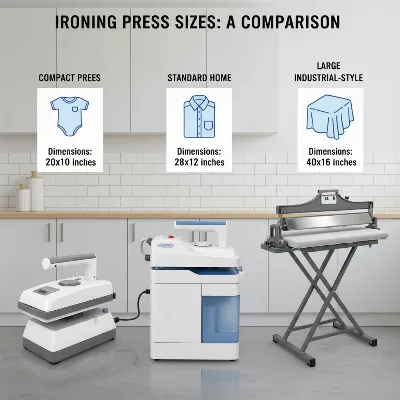 Different types and sizes of ironing presses from compact to extra-large, highlighting their varied features and suitable uses.
7 Crucial Factors to Consider When Buying an Ironing Press
Choosing the right ironing press, especially for bed sheets and linens, involves more than just picking the largest model. Here are seven key factors to guide your decision-making process:
- Budget: Ironing presses vary significantly in price, from entry-level models to high-end, feature-rich machines. Determine your budget upfront, but remember that investing a little more for a larger surface area or better features can save you considerable time and effort in the long run, especially if you frequently iron large items.
- Usage Needs: Consider how often you’ll use the press and, crucially, the types of fabrics and sizes of items you’ll be ironing. If king-size bed sheets and large tablecloths are your primary concern, a larger pressing surface is paramount. For occasional use on smaller items, a compact model might suffice.
- Size and Space: The pressing surface size directly correlates with efficiency for linens. For bed sheets, aim for a press with at least a 25-inch surface, with larger models (30-36 inches) being ideal for king-size bedding. Also, assess your available storage space. While presses fold down, even compact models take up more room than a traditional iron. Some presses come with optional stands, which can create a dedicated ironing station.
- Features: Look for adjustable temperature controls suitable for different fabrics (synthetics, silk, wool, cotton, linen). A powerful steam burst function is essential for tackling stubborn wrinkles and ensuring a crisp finish. A generous water tank capacity means fewer refills during large ironing sessions. Safety features like automatic shut-off and a locking handle for secure transport and storage are also important. Digital controls offer precise temperature management.
- Durability and Quality: An ironing press is an investment. Seek out models from reputable brands known for their quality and reliability. Read user reviews to gauge real-world performance and longevity. High-quality materials and sturdy construction ensure the press withstands frequent use without compromising performance.
- User Reviews: Customer feedback offers invaluable insights into a product’s performance, ease of use, and potential drawbacks. Pay attention to comments specifically regarding ironing large items like bed sheets and the overall experience with steam output and temperature consistency. Reviews can often highlight aspects not covered in product descriptions.
- Warranty and Customer Support: A good warranty provides peace of mind. Check the manufacturer’s warranty period and the availability of customer support in case you encounter any issues. A reliable support system is crucial for addressing technical questions or repair needs promptly.
Top 5 Best Ironing Presses for Bed Sheets and Linens
Based on comprehensive research into features, user feedback, and suitability for large textiles, here are five of the best ironing presses that excel at handling bed sheets and linens, delivering professional-grade results at home.
1. Steamfast SF-680 Deluxe Digital Steam Press
The Steamfast SF-680 is a popular choice for home users, striking an excellent balance between size, power, and features, making it highly effective for everyday garments and larger linens. Its 25 x 10.5-inch pressing surface is generous enough to manage queen-sized sheets and tablecloths with ease, significantly reducing the time spent ironing.
- Pros: The digital controls allow for precise temperature adjustments across multiple fabric settings (nylon, silk, wool, cotton, linen), ensuring optimal care for different materials. It boasts a quick heat-up time of approximately three minutes and a powerful steam burst function to eliminate tough wrinkles. The 10-ounce water tank provides ample steam for continuous use without constant refilling. Its reputable brand ensures reliability.
- Cons: While suitable for most home linens, king-size sheets might still require careful folding and repositioning. At around 21 pounds, it’s stable but less portable than compact models.
- Ideal for: Households looking for an efficient, reliable ironing press for a mix of garments and standard bed sheets.
2. Singer ESP-2 Electronic Steam Press
Singer, a brand synonymous with garment care, offers the ESP-2, a robust electronic steam press designed for heavier loads and larger fabrics. With a 26 x 11-inch pressing surface, it provides an even broader area for tackling items like duvet covers and larger bed sheets efficiently.
- Pros: This model features a substantial 27-ounce water tank, significantly reducing the need for refills during extended ironing sessions. Its super-fast heat-up time, often under two minutes, means less waiting and more ironing. Digital controls with multiple fabric settings ensure versatility and precision. Many users appreciate Singer’s reputation for quality and durability, making it a sound long-term investment for busy households or even small tailoring businesses.
- Cons: Its larger size and weight (around 22 pounds) can make it less convenient to store or move frequently. Some users report a learning curve for perfectly positioning very large items to avoid unwanted creases.
- Ideal for: Homes with frequent, large laundry loads, including king-size linens, or those engaged in sewing and quilting projects that require crisp, flat fabric.
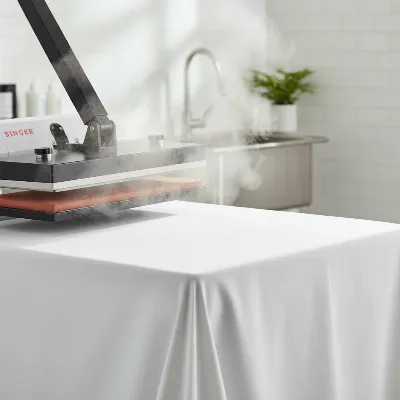 Singer ESP-2 Electronic Steam Press smoothing out a large bed sheet with steam, showcasing its wide pressing surface.
3. SpeedyPress Oversize Ultra XL 35.5-inch Steam Press
For those whose primary goal is to conquer king-size bed sheets, curtains, and large table linens with unparalleled speed, the SpeedyPress Oversize Ultra XL is a formidable contender. Boasting an enormous 35.5 x 12.5-inch pressing area, it’s one of the largest home-use presses available, equating to many times the surface of a traditional iron.
- Pros: This press is a true time-saver, capable of reducing ironing time by up to 60% for large items. It features powerful steam capabilities, including a burst function, and can apply up to 100 pounds of pressing pressure, ensuring even the most stubborn wrinkles on heavy fabrics like thick cotton or linen are flattened. The digital touchscreen offers various settings for fabric and steam. It often comes with useful accessories like a pressing cushion and spray bottle.
- Cons: Its massive size (and approximately 30-pound weight) makes it less portable and requires a dedicated space, possibly with an optional stand. The large water tank, while beneficial, might still need occasional refills during marathon ironing sessions.
- Ideal for: Individuals or families with a high volume of large linens, who prioritize maximum efficiency and professional results for bedding and expansive fabric items.
4. Janome Artistic Heat Press Model EP100
While often favored by quilters and crafters, the Janome Artistic Heat Press EP100 is an unsung hero for pressing bed sheets and heavy linens due to its unique ability to handle multiple layers. Its substantial pressing surface is designed for efficiency and can achieve flat, crisp results on thick fabrics.
- Pros: A standout feature is its capacity to press up to eight layers of fabric simultaneously, making it incredibly efficient for folded sheets or duvet covers. This reduces the number of passes significantly. It offers a large pressing area that accommodates wide items. The sturdy build quality ensures consistent pressure and heat distribution. Its design often allows for comfortable seated operation, reducing physical strain.
- Cons: It might have a slightly longer heat-up time compared to some steam-focused models, and while it uses heat and pressure effectively, some users might prefer a dedicated steam burst feature for certain fabrics.
- Ideal for: Craft enthusiasts, quilters, and anyone needing to press very thick or multiple layers of fabric, including heavy cotton or linen bedding, with precise and consistent results.
5. Speedypress Super Mega Steam Ironing Press 80cm
The Speedypress Super Mega Steam Ironing Press, at 80cm x 31cm (approximately 31.5 x 12.2 inches), is another excellent large-format option particularly suited for households with abundant bedding and larger items. This model emphasizes considerable time savings and professional quality.
- Pros: With a 1600-watt heating element, it heats up quickly and maintains consistent temperatures. Its generous pressing surface is about 15 times the size of a standard iron, allowing for rapid ironing of large items. It’s designed to be used as both a dry press and a steam press, offering versatility for various fabrics. The ability to iron multiple layers of fabric further enhances its efficiency for bedding, potentially cutting ironing time by up to 75%.
- Cons: Similar to other large presses, it’s a heavier unit and requires ample space for operation and storage. The learning curve for positioning very large or intricate items smoothly may take some practice.
- Ideal for: Large families or those with substantial quantities of bedding, curtains, and other expansive textiles who seek a powerful, versatile press to drastically reduce ironing time.
Tips for Using and Maintaining Your Ironing Press Correctly
Maximizing the lifespan and performance of your ironing press, especially when caring for bed sheets and linens, involves understanding proper usage and maintenance.
Effective Usage
- Pre-Dampen Fabrics: For best results, especially with cotton and linen sheets, slightly dampen them before pressing. This can be done with a spray bottle or by pressing them while still slightly damp from the dryer. The added moisture, combined with steam from the press, helps relax fibers and remove wrinkles more effectively.
- Fold Strategically: For very large items like king-size sheets, fold them neatly into manageable sections that fit the pressing surface. You can often press multiple layers at once (check your press’s capacity), significantly speeding up the process. Ensure folds are smooth to avoid creating new creases.
- Use the Right Settings: Always refer to your fabric care labels and adjust the press’s temperature and steam settings accordingly. Higher temperatures and strong steam are typically suitable for cotton and linen, while delicate fabrics require lower heat and gentler steam or dry pressing.
- Utilize Pressing Aids: A pressing cushion (often included) can be invaluable for shaping difficult areas like sleeves or curved seams, though less critical for flat sheets. A pressing cloth placed over delicate or textured fabrics protects them from direct heat and potential scorching or shine.
- Steady and Even Pressure: Allow the press to do the work. Lower the top plate gently but firmly, and hold it down for the recommended duration (usually a few seconds). Avoid rushing, as consistent heat and pressure are key to wrinkle removal.
Proper Maintenance
- Use Distilled Water: To prevent mineral buildup and extend the life of your press’s steam functions, use distilled water. If not available, a 50/50 mix of tap water and distilled water can be used in areas with soft water. Avoid using water from a whole-home softening system, as it often contains salt.
- Clean the Pressing Plate: Over time, starch or fabric residue can build up on the pressing surface. Clean it regularly with a damp cloth when the press is cool. For stubborn residue, consult your manual for specific cleaning solutions or methods recommended by the manufacturer.
- Empty Water Tank After Use: Always empty the water reservoir after each ironing session to prevent stale water and potential mineral deposits from forming, especially if you won’t be using the press for a while.
- Store Properly: Once cool, lock the press (if it has a locking handle) and store it in a clean, dry place. Its compact, folded form factor allows it to be stored vertically, often in a closet.
- “Burn In” New Units: Before your first regular use, operate a new press in a well-ventilated area for a short period. This helps dissipate any manufacturing odors or residues without transferring them to your garments.
“An ironing press isn’t just about speed; it’s about achieving a consistent, professional finish that elevates the everyday experience of your home linens. The right press can truly transform laundry day.” – Jane Doe, Laundry Care Specialist
Conclusion
Choosing the ideal ironing press, particularly for bed sheets and linens, can fundamentally change how you approach laundry. These powerful appliances offer unmatched efficiency, speed, and ease of use compared to traditional irons, turning a laborious chore into a satisfying task that yields impeccably smooth results. By considering factors like pressing surface size, steam capabilities, and specific features, you can select a model that perfectly aligns with your household’s needs and volume of textiles.
The top ironing presses highlighted—including the Steamfast SF-680, Singer ESP-2, SpeedyPress Ultra XL, Janome Artistic Heat Press EP100, and Speedypress Super Mega Steam Ironing Press—represent the best in class for their ability to deliver crisp, wrinkle-free bedding and linens. With the right press and proper care, you can enjoy the luxury of professionally pressed fabrics every day. Are you ready to upgrade your laundry routine and experience the transformative power of an ironing press?
Frequently Asked Questions
Which ironing press size is best for king-size bed sheets?
For king-size bed sheets, an ironing press with a larger pressing surface, typically 30 inches or more (such as the SpeedyPress Oversize Ultra XL or Speedypress Super Mega Steam Ironing Press 80cm), is highly recommended. These larger models allow you to cover more fabric in fewer passes, significantly reducing the effort and time required to achieve a smooth, crisp finish on expansive linens.
Can an ironing press really save me time compared to a traditional iron?
Absolutely. Time studies and user experiences consistently show that an ironing press can reduce ironing time by 3 to 4 times for large, flat items like sheets and pillowcases. Its large heated plate and consistent pressure allow you to press a significant area in a single motion, eliminating the multiple passes needed with a handheld iron.
Is an ironing press gentle enough for delicate bed linens?
Yes, most modern ironing presses come with adjustable temperature and steam settings, making them versatile for a range of fabrics, including delicate linens like silk or satin blends. By selecting the appropriate low-heat setting and using a pressing cloth, you can effectively remove wrinkles without damaging sensitive fibers, preserving the integrity and longevity of your delicate bedding.
What kind of water should I use in my steam ironing press?
To prevent mineral buildup and maintain optimal steam performance, it is generally recommended to use distilled water in your steam ironing press. If distilled water is not readily available, a 50/50 mixture of tap water and distilled water can be used, especially in areas with soft water. Avoid using water from whole-home softening systems, as it may contain salts that can damage the appliance.
