A heavy-duty ironing press is an indispensable asset for small businesses like bed and breakfasts, dry cleaners, tailor shops, and guesthouses, transforming time-consuming garment care into quick, professional finishes. These specialized machines are engineered for high-volume, continuous operation, applying significant heat and pressure over large surface areas to achieve crisp, wrinkle-free results efficiently. They can reduce ironing time by up to 75% compared to manual methods, ensuring a consistently professional finish for a wide range of fabrics.
Understanding Heavy-Duty Ironing Presses: What They Are and Why Your Small Shop Needs One
A heavy-duty ironing press is a specialized machine engineered to apply significant heat and pressure over a large surface area, designed for high-volume, professional-grade ironing. Unlike typical household irons, these machines are built for continuous operation and deliver superior results, making them a cornerstone for commercial establishments. They often feature robust construction, powerful heating elements, and enhanced steam capabilities, providing a level of performance that hand-held irons simply cannot match.
For a small shop, the advantages of integrating a heavy-duty ironing press are substantial. These machines drastically increase efficiency, often reducing ironing time by up to 75% compared to manual methods. They ensure a consistently professional finish, delivering crisp, wrinkle-free garments and linens that leave a lasting impression on your customers. By minimizing manual effort, they reduce labor costs and operator fatigue, allowing staff to focus on other critical tasks. Furthermore, their versatility handles a wide range of fabrics—from delicate silks to heavy cotton sheets and sturdy uniforms—while their durable construction ensures they withstand the rigors of continuous commercial use for years to come.
Types of Heavy-Duty Ironing Presses: Choosing the Best Fit for Your Business
Selecting the right heavy-duty ironing press depends heavily on the specific needs of your small business. Different types are optimized for various items and workloads, each offering unique benefits. Understanding these distinctions is crucial for making an informed decision.
Flatwork Ironers (Rotary/Roller Presses)
Flatwork ironers, also known as rotary or roller presses, feature large, heated rollers designed to press flat items like sheets, tablecloths, and pillowcases. Linens are fed into the machine, pass over heated surfaces, and emerge perfectly pressed. These machines are exceptionally efficient for large quantities of flat items. They excel at high throughput and can often integrate automated features like feeders and folders, further streamlining the laundry process. However, their design makes them less versatile for shaped garments and they typically require more space and a larger initial investment. Flatwork ironers are ideal for small laundries, hotels, and guesthouses that process a significant volume of flat linens daily.
Steam Ironing Presses (Clamshell/Buck Presses)
Steam ironing presses, often referred to as clamshell or buck presses, operate by clamping garments between two heated plates, or “bucks,” often with the addition of steam. These presses are highly versatile, capable of pressing a wide variety of garments including shirts, trousers, and smaller flat items with precision. They are generally more compact than rotary ironers, making them suitable for shops with limited space, and provide excellent results for items requiring sharp creases or a pristine finish. While they may not process large flat items as quickly as a rotary iron, their ability to handle diverse garment types makes them invaluable. These presses are perfect for dry cleaners, tailor shops, boutiques, and bed and breakfasts that handle a mix of garment types.
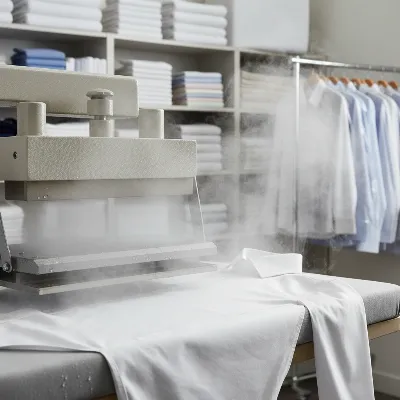 A heavy-duty steam ironing press in action, pressing a garment in a small shop setting.
Vacuum Ironing Tables with Commercial Irons
A vacuum ironing table, combined with a separate heavy-duty commercial steam iron, offers a high degree of control and precision. The table itself is heated and features a breathable surface with a vacuum function that holds the fabric in place and quickly removes steam, setting creases and drying the garment. While this setup is more manual than a press, it provides unparalleled precision for intricate garments and delicate detailing. It may be slower for high volumes of simple items but is unmatched for quality on complex pieces. This combination is best suited for couture studios, tailoring and alteration shops, or any garment finishing business where meticulous precision is paramount.
Comparing Heavy-Duty Ironing Press Types for Small Shops
Choosing the best ironing press means weighing your needs against the capabilities of each type. Here’s a comparative overview to help guide your decision:
| Feature | Flatwork Ironer (Rotary) | Steam Ironing Press (Clamshell) | Vacuum Ironing Table + Commercial Iron |
|---|---|---|---|
| Best For | High volume of flat linens (sheets, tablecloths) | Mixed garments, uniforms, smaller flat items, precise creases | Intricate garments, detailed finishing, tailoring, delicate fabrics |
| Efficiency | Very high for flat items, reduces time significantly | High for a range of items, faster than handheld ironing | High precision, but can be slower for bulk work |
| Versatility | Limited to flat items (though some can do small items) | Good for various garment types and sizes | Excellent for any garment, allowing manual manipulation |
| Space | Can be large, but compact models exist | Variable, some fold flat for storage | Requires a table footprint, but often less bulky |
| Initial Cost | Generally higher investment | Mid-range | Entry to mid-range (table + iron) |
| Ease of Use | Automated, easy for flat items; learning curve for advanced features | Relatively straightforward, quick results | Requires skilled operator for optimal results |
7 Essential Factors to Consider When Buying a Heavy-Duty Ironing Press for Your Small Shop
Investing in a heavy-duty ironing press is a significant decision for any small business. To ensure you select the perfect machine that will serve your needs efficiently for years, consider these seven crucial factors:
- Budget: Start by defining your realistic investment range. Remember to account for not only the upfront purchase price but also potential ongoing running costs, including energy consumption, water usage (for steam models), and any routine maintenance or replacement parts. A cost-effective solution often balances initial outlay with long-term operational expenses.
- Workload and Volume: Accurately assess your daily or weekly ironing needs. Consider the typical number of items you process, their sizes, and how frequently you will use the machine. Matching the press’s capacity and throughput to your specific workload is vital; an undersized machine will slow you down, while an oversized one might be an unnecessary expense and take up too much space.
- Space Availability: Measure the area where you intend to place the ironing press. Heavy-duty machines can vary significantly in size. Look for models with compact designs, those that fold flat for storage, or units with smaller footprints if space is a premium in your shop. Ensure there’s adequate room for operation and maintenance.
- Fabric Types and Garment Variety: Consider the range of materials and garment shapes you typically work with. Some presses excel at flat linens, while others are better suited for structured garments, delicate silks, heavy cotton, or uniforms. Ensure the machine offers appropriate temperature and steam controls to safely and effectively handle all your fabric types without damage.
- Key Features: Modern ironing presses come with a host of features designed to enhance performance and user experience. Look for adjustable temperature and steam settings for versatility across fabrics, and a sufficiently large pressing surface for faster processing of bigger items. High pressing force is crucial for achieving crisp finishes on stubborn wrinkles. Prioritize safety features like automatic shut-off, protective frames, and finger guards. Additional functions such as bottom-up steam or vacuum capabilities can further improve steam penetration and moisture removal, enhancing finish quality.
- Durability and Build Quality: A heavy-duty press is an investment meant to last. Research reputable brands known for commercial-grade equipment and look for robust construction. Key indicators of quality include stainless steel soleplates, heavy-duty frames, and components designed for continuous commercial use. These materials and build specifications ensure the machine can withstand the demands of a busy small shop environment.
- Reviews and Warranty/Support: Before purchasing, consult user reviews and testimonials to gain insights into real-world performance and reliability. A strong warranty policy and easily accessible customer support are indispensable for commercial equipment, providing peace of mind and ensuring that any potential issues can be promptly addressed, minimizing downtime for your business.
Top Heavy-Duty Ironing Presses for Small Shops: A Curated Selection
Choosing the right heavy-duty ironing press can dramatically impact your small shop’s productivity and the quality of your finished garments. Here’s a curated selection of top models and types that cater to various commercial needs, offering a blend of efficiency, durability, and professional results.
Speedypress C90 Dry Ironing Press
The Speedypress C90 Dry Ironing Press is a robust choice for businesses requiring significant pressing force and a large work surface. It boasts a substantial 36-inch pressing area and an impressive 132 lb pressing force, making it highly effective for multi-layer ironing of large items like sheets and tablecloths. Designed for continuous commercial use, it’s also energy-efficient and folds flat for convenient storage in smaller spaces. While primarily a dry press, its capabilities make it ideal for guesthouses, small hotels, restaurants, and laundromats prioritizing a powerful, consistent dry finish.
Speedypress SteamRise 8000 Heavy Duty Steam Ironing Press
For those who need the power of steam, the Speedypress SteamRise 8000 offers an 81cm pressing surface and a potent 2200W heating element. Its standout feature is bottom-up steam technology, which ensures deep penetration for stubborn wrinkles. This model is well-suited for busy households seeking professional results and light commercial use, making it an excellent choice for smaller B&Bs or businesses with moderate steam ironing demands. It typically comes with a range of accessories to enhance its functionality.
Fagor Professional Industrial Steam Iron Press (Universal Buck)
Fagor Professional offers industrial steam iron presses designed for serious commercial applications. Their models, especially those with a “universal buck,” utilize a pneumatic system to deliver high, consistent pressure, ensuring a flawless finish. These machines are versatile enough to handle a range of larger garments such as trousers, sheets, and curtains, and are known for their low energy consumption and rapid finishing times. Fagor presses are available as stand-alone units with integrated boilers and compressors or can be connected to external steam and compressed air networks. They are an excellent investment for small laundries, dry cleaners, and tailoring shops processing diverse, larger items.
JLA Commercial Rotary Iron (e.g., JLA 1423 Iron)
When your primary need is high-volume flatwork, a commercial rotary iron like the JLA 1423 is a game-changer. These machines are engineered to process numerous flat linens per hour (the JLA 1423 can handle up to 30 linens hourly), dramatically reducing the time and effort involved. JLA models feature multiple speed and heat settings to accommodate various fabric types, an automated return feed for operator convenience, and essential safety features like finger guards. While they represent a larger investment and footprint, they are indispensable for small hotels, spas, or care homes that manage substantial quantities of flat linen, delivering consistent, high-quality results.
Reliable/Sapporo/Silver Star Mini Boiler + Gravity Feed Iron System
For shops requiring precision and continuous steam without the bulk of a large press, a mini boiler paired with a gravity-feed commercial iron is an excellent solution. Brands like Reliable, Sapporo, and Silver Star offer systems that provide commercial-grade, continuous steam, perfect for detailed work on various garments. While it’s a more manual operation and requires a dedicated ironing table, this setup allows for exceptional control and is highly valued in tailor shops, alteration services, or any garment finishing business where meticulous attention to detail is paramount over sheer speed for flat items.
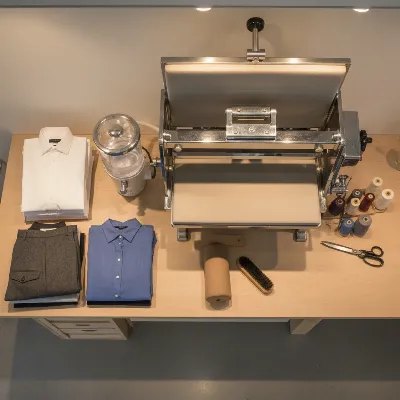 A compact, efficient ironing station in a small shop, featuring a heavy-duty press.
Tips for Using and Maintaining Your Heavy-Duty Ironing Press
To maximize the performance, extend the lifespan, and ensure the safety of your heavy-duty ironing press, proper usage and diligent maintenance are key.
Proper Usage
Always begin by thoroughly reading your machine’s manual to understand its specific features, operating instructions, and safety guidelines. Before ironing, pre-sort fabrics by type and the required temperature settings to prevent damage and optimize efficiency. Use the appropriate temperature and steam levels for each fabric—avoid scorching delicate materials and maximize steam for heavier ones. When loading garments, position them smoothly and evenly to avoid creating new wrinkles or creases. Crucially, always adhere to safety protocols, utilizing features like finger guards and protective frames to prevent accidents.
Maintenance for Longevity
Regular cleaning is fundamental; routinely wipe down the pressing surfaces and exterior of the machine to prevent residue buildup. For steam-generating models, descaling the boiler or water tank regularly is vital to prevent mineral deposits, which can impair performance and lead to costly repairs. Using distilled water can also significantly reduce mineral buildup. Inspect and replace worn or damaged covers and padding on your press, as these components are essential for optimal heat transfer and wrinkle removal. For rotary ironers, ensure that belts are correctly tensioned and rollers remain clean for smooth operation. Finally, consider scheduling periodic professional servicing, especially for complex commercial machines, to ensure all components are functioning correctly and to address any potential issues proactively.
Troubleshooting Common Issues
Even with proper care, issues can arise. If wrinkles remain after pressing, verify your temperature and steam settings, apply more pressure (if adjustable), and ensure you’re not overloading the fabric. Water leaks in steam presses often indicate an issue with the water tank seal or a need for descaling. If your machine isn’t heating, first check the power supply and any circuit breakers. Consult your manual for specific reset procedures, and if the problem persists, contact a qualified service technician.
Conclusion
A heavy-duty ironing press is an invaluable asset for any small shop committed to efficiency, professional results, and superior customer satisfaction. These robust machines offer a significant upgrade from conventional irons, delivering crisp, flawless finishes while dramatically reducing the time and labor involved in garment and linen care. By understanding the different types available—from high-capacity flatwork ironers to versatile steam presses and precision vacuum tables—and carefully considering essential factors like budget, workload, and specific features, you can make an informed decision tailored to your business needs. Investing in the right press not only streamlines your operations but also enhances the overall presentation of your products and services. Explore the models discussed, assess your shop’s unique requirements, and empower your business with an ironing solution that truly stands out.
Which heavy-duty ironing press feature will revolutionize your small shop’s efficiency the most?
Frequently Asked Questions
What is the difference between a home and a heavy-duty ironing press?
A home ironing press is designed for occasional use and lighter loads, typically featuring lower wattage and smaller pressing surfaces. Heavy-duty or commercial presses are built for continuous operation, higher volumes, and tougher fabrics, offering superior wattage, pressing force, and durability to meet professional demands efficiently.
Can a heavy-duty ironing press save my small business money?
Yes, a heavy-duty ironing press can significantly save your small business money. By drastically reducing ironing time, it cuts down on labor costs and increases overall productivity. Its efficiency and consistent professional results also enhance customer satisfaction, potentially leading to repeat business and a stronger brand reputation.
How much space does a commercial ironing press need?
The space required for a commercial ironing press varies widely by type and model. Compact steam presses might fold flat for storage, needing less than a meter square. Larger flatwork ironers or industrial vacuum tables can require several square meters of dedicated space, so measuring your available area is crucial before purchasing.
Are heavy-duty ironing presses safe to operate?
Heavy-duty ironing presses are designed with multiple safety features, including protective frames, finger guards, and automatic shut-off functions, making them safe to operate when used correctly. Always follow the manufacturer’s instructions and safety guidelines, and ensure proper training for operators to prevent accidents.
What kind of maintenance do ironing presses require?
Maintenance typically involves regular cleaning of pressing surfaces, descaling for steam models (especially important to prevent mineral buildup), and inspecting and replacing worn covers or padding. For more complex machines, periodic professional servicing is recommended to ensure all components are functioning optimally and to extend the unit’s lifespan.
Can I iron all fabric types with a heavy-duty press?
Most heavy-duty ironing presses are versatile and can handle a wide range of fabric types, from delicate silks to sturdy cottons and linens, thanks to adjustable temperature and steam settings. However, always consult your machine’s manual and test on an inconspicuous area first, especially for very sensitive or synthetic materials.
Frequently Asked Questions
What is the difference between a home and a heavy-duty ironing press?
A home ironing press is designed for occasional use and lighter loads, typically featuring lower wattage and smaller pressing surfaces. Heavy-duty or commercial presses are built for continuous operation, higher volumes, and tougher fabrics, offering superior wattage, pressing force, and durability to meet professional demands efficiently.
Can a heavy-duty ironing press save my small business money?
Yes, a heavy-duty ironing press can significantly save your small business money. By drastically reducing ironing time, it cuts down on labor costs and increases overall productivity. Its efficiency and consistent professional results also enhance customer satisfaction, potentially leading to repeat business and a stronger brand reputation.
How much space does a commercial ironing press need?
The space required for a commercial ironing press varies widely by type and model. Compact steam presses might fold flat for storage, needing less than a meter square. Larger flatwork ironers or industrial vacuum tables can require several square meters of dedicated space, so measuring your available area is crucial before purchasing.
Are heavy-duty ironing presses safe to operate?
Heavy-duty ironing presses are designed with multiple safety features, including protective frames, finger guards, and automatic shut-off functions, making them safe to operate when used correctly. Always follow the manufacturer's instructions and safety guidelines, and ensure proper training for operators to prevent accidents.
What kind of maintenance do ironing presses require?
Maintenance typically involves regular cleaning of pressing surfaces, descaling for steam models (especially important to prevent mineral buildup), and inspecting and replacing worn covers or padding. For more complex machines, periodic professional servicing is recommended to ensure all components are functioning optimally and to extend the unit's lifespan.
Can I iron all fabric types with a heavy-duty press?
Most heavy-duty ironing presses are versatile and can handle a wide range of fabric types, from delicate silks to sturdy cottons and linens, thanks to adjustable temperature and steam settings. However, always consult your machine's manual and test on an inconspicuous area first, especially for very sensitive or synthetic materials.
Choosing a Heavy-Duty Ironing Press for Your Small Shop
Selecting the right heavy-duty ironing press involves evaluating your budget, workload, space, and fabric types to ensure optimal efficiency and professional results for your business.
Start by setting a realistic budget, considering both the initial purchase price and ongoing operational costs like energy and maintenance. Accurately assess your daily or weekly ironing needs, including the number and size of items, to match the press's capacity to your workload.
Measure the area where the ironing press will be placed. Heavy-duty machines vary significantly in size; look for compact models or those that fold flat if space is limited. Ensure there is adequate room for both operation and maintenance.
Identify the range of materials and garment shapes you typically work with. Choose a machine with appropriate temperature and steam controls for all your fabric types. Prioritize key features like adjustable settings, a large pressing surface, high pressing force, and essential safety features such as automatic shut-off and finger guards.
Research reputable brands known for commercial-grade equipment and look for robust construction, including stainless steel components. Check user reviews and ensure the product comes with a strong warranty and easily accessible customer support to minimize downtime.

I run a small B&B and was spending hours every week on linens. Investing in one of these heavy-duty presses, specifically the Speedypress model mentioned, has been a game-changer. It really does cut down ironing time by at least 75%, and everything looks so much more professional. My guests have even commented on the crisp sheets!
I manage a guesthouse and we used to send out all our laundry, which was getting expensive. After reading about these presses, we decided to try doing it in-house. The ease of use and the professional finish we get now is incredible. It’s built for high-volume, and it really delivers, making our laundry process so much more manageable and cost-effective.
As a small dry cleaner, efficiency is key. We upgraded to a commercial press after our old one finally gave out. The continuous operation feature on these heavy-duty models is essential for our volume. It handles everything from shirts to tablecloths with ease, giving that consistent, wrinkle-free result our customers expect. Definitely worth the investment for any high-volume garment care business.
I picked up one of the mid-range presses for my tailor shop, hoping to speed up finishing. While it does a decent job on most fabrics and the large surface area is great, I’ve found it struggles a bit with very delicate silks. It sometimes leaves a slight sheen if I’m not super careful with the heat settings. Still, for everyday items, it’s a solid improvement.