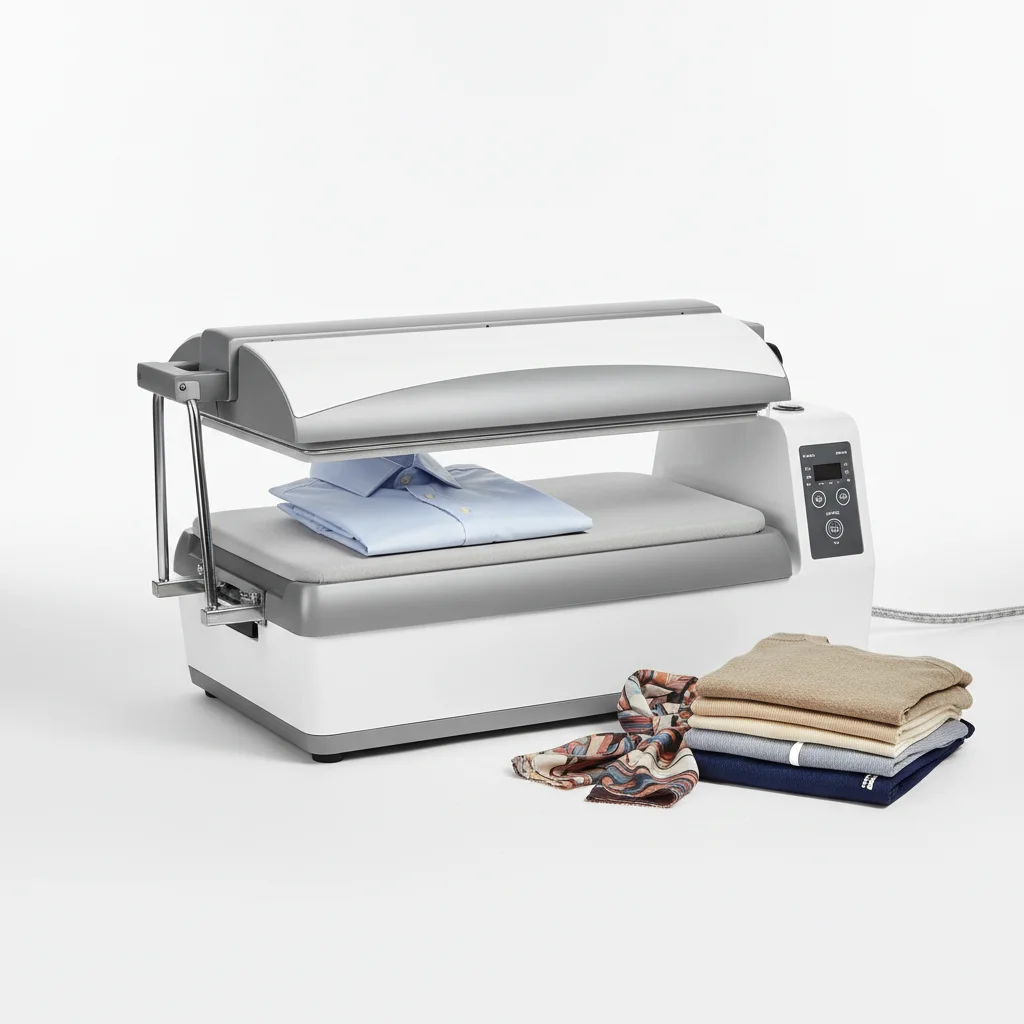
An ironing press can indeed handle a wide variety of shirt fabric types, from delicate silks to sturdy cottons, provided you use the correct temperature settings and techniques. While exceptionally effective for common materials like cotton, linen, and blends, special care is required for synthetics and very fine fabrics to prevent damage. Understanding your press’s capabilities and limitations is key to achieving perfectly crisp shirts without scorching or stretching.
Understanding Fabric Types and Heat Sensitivity
Different shirt fabrics react uniquely to heat and pressure. Natural fibers like cotton and linen are generally more resilient and can withstand higher temperatures, making them ideal candidates for an ironing press. These fabrics benefit greatly from the even heat and pressure, resulting in a professional, wrinkle-free finish that’s difficult to achieve with a traditional iron. For these materials, you can often use the higher heat settings on your press, sometimes with a burst of steam for stubborn wrinkles.
Conversely, synthetic fabrics such as polyester, rayon, and nylon are far more heat-sensitive. Applying too much heat can cause them to melt, scorch, or develop a permanent sheen. When pressing synthetic shirts, it’s crucial to use the lowest heat setting recommended for that fabric type, often without steam, and to use a pressing cloth as an additional protective barrier. Always check the garment’s care label for specific instructions before pressing.
Techniques for Delicate and Blended Fabrics
Delicate fabrics like silk, satin, and certain blends require a gentle approach. For these, always use a pressing cloth and the lowest heat setting. Some presses even have a ‘dry’ setting, which is ideal for fabrics that are sensitive to moisture. Place the shirt smoothly on the pressing surface, cover with a clean pressing cloth, and press for a very short duration, often just a few seconds. Repeated short presses are better than one long press to avoid damage. For shirts with intricate details like embroidery or embellishments, turn the shirt inside out or use a padded surface to protect the raised areas.
- Always check the garment’s care label for specific heat recommendations.
- Use a pressing cloth for all delicate and synthetic fabrics.
- Start with the lowest heat setting and increase gradually if needed.
- Avoid excessive steam on heat-sensitive materials.
- Press in short intervals rather than prolonged contact.
Maximizing Results for Common Shirt Materials
|
Our Picks for the Best Ironing Press in 2026
As an Amazon Associate I earn from qualifying purchases.
|
||
| Num | Product | Action |
|---|---|---|
| 1 | Cricut EasyPress Mini™ LT - Mint Green - Mini Heat Press for Pressing Shoes, Baby Clothes, T-Shirts, & More - Easy to Use with a Single Setting - Precision Tip - Compact & Portable Mini Iron |

|
| 2 | BLACK+DECKER Press & Steam 2-in-1 Iron and Steamer, 180% More Steam & One Temperature Technology, Ceramic Soleplate, Safe on All Fabric Types |
|
| 3 | HTVRONT Heat Press Mini Heat Press Machine, Small Heat Press Portable Iron Press Machine for T Shirts, Hats, Heating Transfer Projects (Mint) |
|
| 4 | Cricut EasyPress Mini Heat Press - for Pressing Small Objects Like Shoes, Stuffed Animals, Hats & More - 3 Heat Settings & Precision Tip - Ceramic-Coated Heat Plate - Compact & Lightweight - Zen Blue |
|
| 5 | Steamfast SF-680 Digital Steam Press with Multiple Fabric Settings and Steam Burst Function,Stainless/Black |
|
| 6 | BLACK+DECKER Easy Steam Compact Iron for Clothes, Automatic Shutoff, Nonstick Plate, Light Weight, 1200 Watts |
|
| 7 | DRFLASH 2-in-1 Steamer & Iron for Clothes,15s Fast Heat-up 1200W Portable Handheld Garment Steamer,Travel Size with Large Ceramic Heat Panel,Quick Wrinkle Removal,110V-120V |
|
| 8 | The Quilted Bear Mini Steam Iron - Lightweight Mini Travel Iron for Effortless Quilting & Wrinkle-Free Clothes with Hard Shell Case - Travel Steamer Craft Press for Clothes & Crafts (Black) |
|
| 9 | Calogy Mini Heat Press, Heat Transfer Machine, Constant Temp Control, Insulated Safety Base, Fits for Crafts, T-Shirt, Hat, Cap, Pillows(White Pink) |
|
| 10 | Steamfast SF-623 Mid-Size Steam Press with Multiple Fabric Settings and Steam Burst Function, Black, 20.47" L x 17.16" W x 6.73" H |
|
For everyday shirts made of cotton, denim, or heavier blends, an ironing press excels at delivering crisp results quickly. Ensure the shirt is slightly damp for best results, as moisture helps to relax the fibers and allows for easier wrinkle removal. Lay the shirt flat, ensuring there are no creases or folds before lowering the press plate. For collars, cuffs, and plackets, you may need to reposition the shirt multiple times to ensure every part receives even pressure. Many users find that pressing shirts in sections—first the back, then the front panels, followed by sleeves—yields the most professional outcome.
Consider investing in a press with adjustable temperature controls and a powerful steam function for versatility. The larger pressing surface of an ironing press significantly reduces the time it takes to iron multiple shirts compared to a hand iron, making it a valuable tool for busy households or small businesses.
When to Use a Press vs. a Hand Iron
While an ironing press is incredibly efficient for most shirts, there are instances where a traditional hand iron might be more suitable. Shirts with complex pleats, ruffles, or very tight corners can be challenging to maneuver on a large press surface. In these cases, the precision of a hand iron allows for better control and detail work. However, for the majority of standard dress shirts, casual button-downs, and t-shirts, the speed and professional finish offered by an ironing press make it the superior choice. For optimal results, some users even combine both tools, using the press for the main body of the shirt and a hand iron for intricate areas.
Ultimately, an ironing press is a highly versatile tool for shirt care, capable of handling a broad spectrum of fabrics with the right approach. By understanding the heat tolerance of different materials and employing proper techniques, you can achieve perfectly pressed shirts every time, saving both time and effort.
