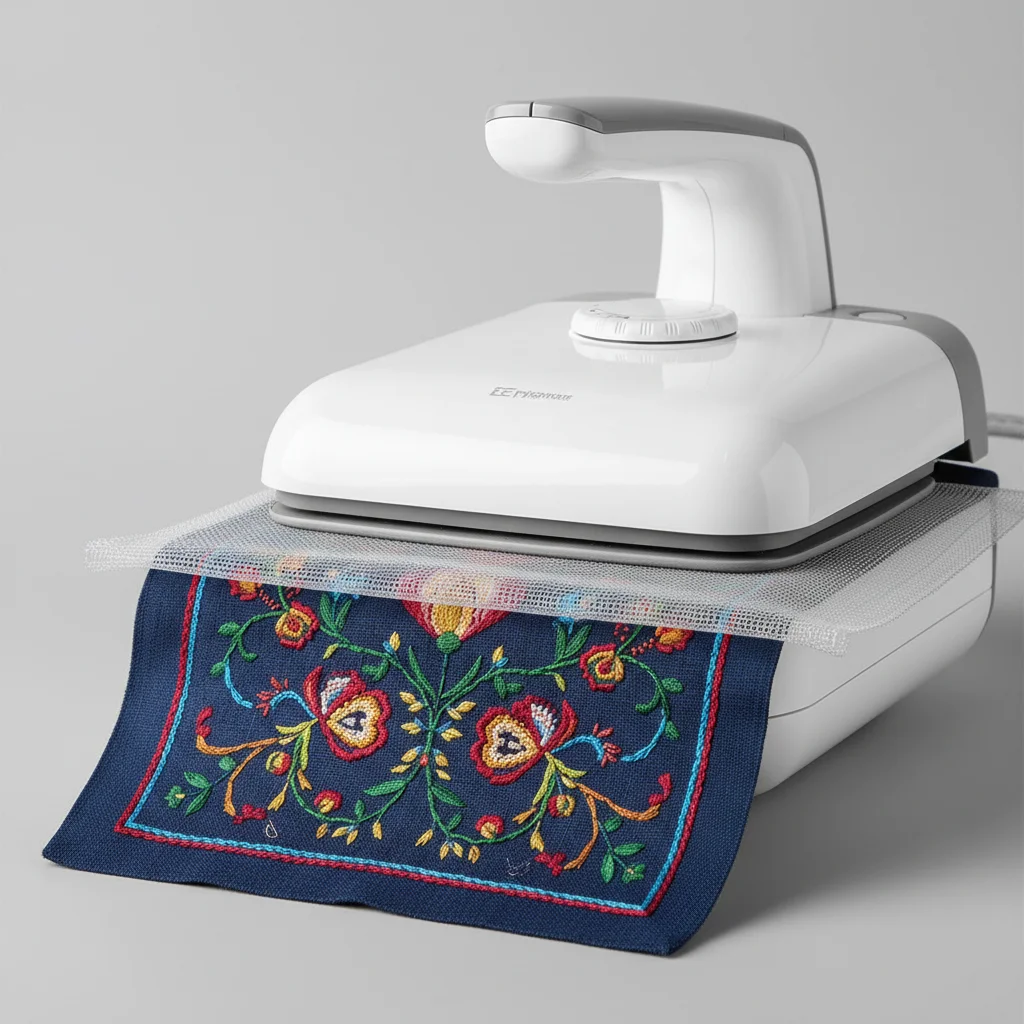
Using an ironing press for embroidery can be safe and effective, provided you follow specific guidelines to protect your stitches and fabric. The key is to use a pressing cloth, moderate heat, and avoid direct, prolonged pressure on raised embroidery. Many embroiderers find an ironing press invaluable for achieving crisp, professional finishes on garments and textiles without distorting intricate designs.
Understanding Heat and Pressure on Embroidery
Embroidery, whether hand-stitched or machine-made, involves threads that can be sensitive to high heat and direct pressure. Excessive heat can melt synthetic threads, scorch delicate fabrics, or cause colors to bleed. Direct, heavy pressure can flatten the raised texture of embroidery, diminishing its visual appeal and potentially damaging the stitches themselves. Therefore, a careful approach is essential when integrating an ironing press into your embroidery finishing process.
The advantage of an ironing press lies in its ability to apply even heat and pressure over a large surface area, which can be beneficial for smoothing out wrinkles in the surrounding fabric without disturbing the embroidery if done correctly. It’s crucial to understand the fabric composition and thread type of your embroidered piece before applying any heat.
Essential Steps for Pressing Embroidered Items
To safely use an ironing press on embroidered items, begin by turning the garment inside out. This protects the embroidery from direct contact with the heated plate. If turning inside out isn’t possible, always use a thick pressing cloth over the embroidered area. A non-stick pressing sheet or a clean, white cotton cloth works best. Set the ironing press to a low to medium heat setting, appropriate for the fabric type of the item, not necessarily the embroidery thread itself.
Place the embroidered item on the pressing pad, ensuring the embroidery is cushioned. If pressing right-side up, position the pressing cloth carefully over the design. Lower the top plate gently, applying only light to moderate pressure for a short duration—typically 5 to 10 seconds. Avoid dragging the item while the press is closed. Repeat pressing in sections if necessary, allowing the fabric to cool slightly between applications. This method helps to set the fabric without crushing the embroidery.
Choosing the Right Pressing Cloth and Temperature
|
Our Picks for the Best Ironing Press in 2026
As an Amazon Associate I earn from qualifying purchases.
|
||
| Num | Product | Action |
|---|---|---|
| 1 | Steamfast SF-623 Mid-Size Steam Press with Multiple Fabric Settings and Steam Burst Function, Black, 20.47" L x 17.16" W x 6.73" H |

|
| 2 | The Quilted Bear Mini Steam Iron - Lightweight Mini Travel Iron for Effortless Quilting & Wrinkle-Free Clothes with Hard Shell Case - Travel Steamer Craft Press for Clothes & Crafts (Black) |
|
| 3 | Cricut EasyPress Mini Heat Press - for Pressing Small Objects Like Shoes, Stuffed Animals, Hats & More - 3 Heat Settings & Precision Tip - Ceramic-Coated Heat Plate - Compact & Lightweight - Zen Blue |
|
| 4 | Steamfast SF-680 Digital Steam Press with Multiple Fabric Settings and Steam Burst Function,Stainless/Black |
|
| 5 | BLACK+DECKER Easy Steam Compact Iron for Clothes, Automatic Shutoff, Nonstick Plate, Light Weight, 1200 Watts |
|
| 6 | BLACK+DECKER Press & Steam 2-in-1 Iron and Steamer, 180% More Steam & One Temperature Technology, Ceramic Soleplate, Safe on All Fabric Types |
|
| 7 | HTVRONT Heat Press Mini Heat Press Machine, Small Heat Press Portable Iron Press Machine for T Shirts, Hats, Heating Transfer Projects (Mint) |
|
| 8 | DRFLASH 2-in-1 Steamer & Iron for Clothes,15s Fast Heat-up 1200W Portable Handheld Garment Steamer,Travel Size with Large Ceramic Heat Panel,Quick Wrinkle Removal,110V-120V |
|
| 9 | Cricut EasyPress Mini™ LT - Mint Green - Mini Heat Press for Pressing Shoes, Baby Clothes, T-Shirts, & More - Easy to Use with a Single Setting - Precision Tip - Compact & Portable Mini Iron |
|
| 10 | Calogy Mini Heat Press, Heat Transfer Machine, Constant Temp Control, Insulated Safety Base, Fits for Crafts, T-Shirt, Hat, Cap, Pillows(White Pink) |
|
The choice of pressing cloth is paramount when working with embroidery. A thin, damp cotton cloth can introduce steam and help relax fabric fibers without direct heat exposure to the embroidery. For delicate threads like silk or rayon, a dry, non-stick pressing sheet offers a protective barrier. Always test a small, inconspicuous area of the fabric and embroidery first, if possible, to ensure the chosen heat setting and pressing cloth are suitable. Different embroidery threads, such as polyester, cotton, or metallic, react differently to heat.
- Use a clean, white cotton cloth for general protection.
- Opt for a non-stick pressing sheet for delicate or synthetic threads.
- A slightly damp cloth can provide gentle steam without direct water application.
- Avoid colored cloths that might transfer dye to your fabric.
- Ensure the cloth is free of lint and debris to prevent transfer to your garment.
When to Avoid the Ironing Press for Embroidery
While an ironing press can be a valuable tool, there are instances where it’s best to avoid it for embroidered items. Highly dimensional embroidery, such as puff embroidery, stumpwork, or designs with beads, sequins, or other embellishments, should not be pressed directly. The pressure from the press will flatten these elements and can cause permanent damage. For such items, steaming or very light, indirect ironing with a traditional iron (hovering above the surface) is a safer alternative. Always prioritize the integrity of your embroidery over a perfectly flat finish.
Consider the type of fabric as well. Very delicate fabrics like organza or chiffon with dense embroidery might be better suited for hand-steaming to prevent distortion or scorching. Always err on the side of caution when dealing with irreplaceable or highly valued embroidered pieces.
Maintaining Your Embroidered Items After Pressing
After pressing your embroidered item, allow it to cool completely on a flat surface before handling or folding. This helps to set the fabric and prevent new wrinkles from forming. Proper storage is also key to maintaining the pristine condition of your embroidery. Store items flat or on padded hangers to avoid creasing the fabric or crushing the embroidery. For items with significant embroidery, consider placing a layer of acid-free tissue paper between folds to further protect the design.
Regular maintenance, such as spot cleaning and gentle washing according to fabric care instructions, will also extend the life of your embroidered pieces. An ironing press, when used correctly, can significantly enhance the professional appearance of your embroidered projects, making them look crisp and well-finished.
