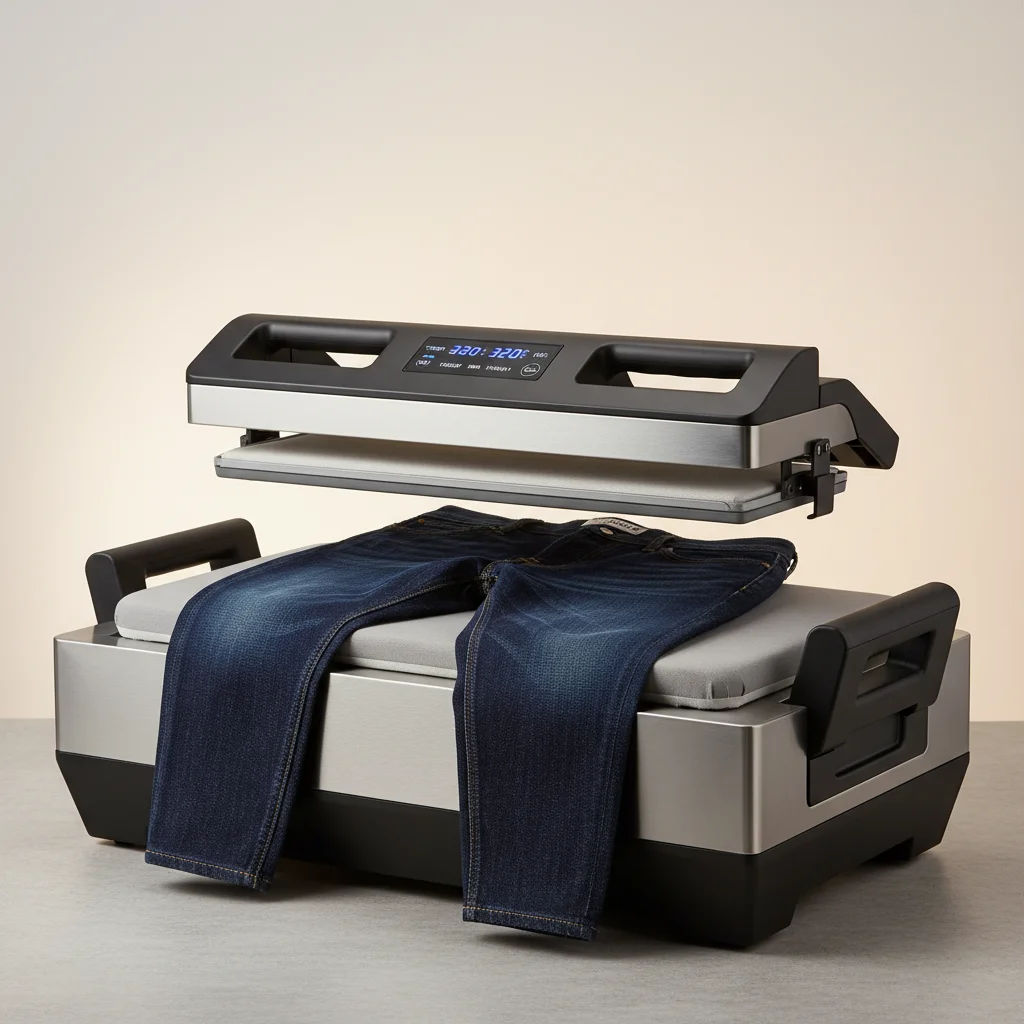
Using an ironing press for denim can significantly streamline the process of achieving crisp, wrinkle-free jeans and jackets. The optimal settings for denim typically involve a higher heat and steam level compared to more delicate fabrics, due to denim’s robust weave and thickness. Specifically, a temperature range of 350-380°F (175-195°C) with a strong steam burst is generally recommended to effectively smooth out creases without damaging the fabric.
Denim, a durable cotton twill fabric, benefits greatly from the consistent heat and pressure an ironing press provides. Unlike a traditional iron, a press covers a larger surface area, making it ideal for the expansive fabric of jeans, skirts, and jackets. The key is to ensure the denim is slightly damp, either by pre-misting it or using the press’s steam function, which helps the fibers relax and respond better to the heat.
Preparing Your Denim for the Ironing Press
Before placing your denim garment on the ironing press, ensure it’s clean and free of any debris. For best results, denim should be slightly damp. You can achieve this by either pressing it shortly after it comes out of the washing machine (before it’s completely dry) or by using a spray bottle to mist it with water. This moisture is crucial for the steam to penetrate the fabric effectively and relax the fibers, making wrinkles easier to remove. Always turn denim inside out to protect its color and finish, especially if it’s dark-wash or has any embellishments.
Optimal Temperature and Steam Settings
For most denim types, a high heat setting is necessary. Aim for a temperature between 350°F and 380°F (175°C and 195°C). Many ironing presses have specific settings for ‘Cotton’ or ‘Heavy Fabrics,’ which are usually appropriate for denim. Pair this with a robust steam function. The steam helps to soften the denim fibers, allowing the press to flatten them more efficiently. If your press has adjustable steam levels, select a high setting. For particularly stubborn wrinkles, you might need to apply steam for a few seconds before fully closing the press.
Techniques for Pressing Different Denim Items
|
Our Picks for the Best Ironing Press in 2026
As an Amazon Associate I earn from qualifying purchases.
|
||
| Num | Product | Action |
|---|---|---|
| 1 | The Quilted Bear Mini Steam Iron - Lightweight Mini Travel Iron for Effortless Quilting & Wrinkle-Free Clothes with Hard Shell Case - Travel Steamer Craft Press for Clothes & Crafts (Black) |

|
| 2 | DRFLASH 2-in-1 Steamer & Iron for Clothes,15s Fast Heat-up 1200W Portable Handheld Garment Steamer,Travel Size with Large Ceramic Heat Panel,Quick Wrinkle Removal,110V-120V |
|
| 3 | Steamfast SF-623 Mid-Size Steam Press with Multiple Fabric Settings and Steam Burst Function, Black, 20.47" L x 17.16" W x 6.73" H |
|
| 4 | Cricut EasyPress Mini Heat Press - for Pressing Small Objects Like Shoes, Stuffed Animals, Hats & More - 3 Heat Settings & Precision Tip - Ceramic-Coated Heat Plate - Compact & Lightweight - Zen Blue |
|
| 5 | Calogy Mini Heat Press, Heat Transfer Machine, Constant Temp Control, Insulated Safety Base, Fits for Crafts, T-Shirt, Hat, Cap, Pillows(White Pink) |
|
| 6 | HTVRONT Heat Press Mini Heat Press Machine, Small Heat Press Portable Iron Press Machine for T Shirts, Hats, Heating Transfer Projects (Mint) |
|
| 7 | BLACK+DECKER Easy Steam Compact Iron for Clothes, Automatic Shutoff, Nonstick Plate, Light Weight, 1200 Watts |
|
| 8 | Steamfast SF-680 Digital Steam Press with Multiple Fabric Settings and Steam Burst Function,Stainless/Black |
|
| 9 | BLACK+DECKER Press & Steam 2-in-1 Iron and Steamer, 180% More Steam & One Temperature Technology, Ceramic Soleplate, Safe on All Fabric Types |
|
| 10 | Cricut EasyPress Mini™ LT - Mint Green - Mini Heat Press for Pressing Shoes, Baby Clothes, T-Shirts, & More - Easy to Use with a Single Setting - Precision Tip - Compact & Portable Mini Iron |
|
When pressing jeans, start with the pockets and waistband, then move to the legs. Lay one leg flat, ensuring there are no folds underneath, and press. Repeat for the other leg. For denim jackets, focus on the back panel first, then the sleeves and collar. Always avoid pressing over zippers, buttons, or rivets directly, as this can damage both the garment and the press plate. Instead, maneuver the fabric around these elements or use a pressing cloth over them for protection. For denim skirts, lay them flat and press in sections, rotating as needed.
- Always turn denim inside out to protect color and embellishments.
- Ensure denim is slightly damp for optimal wrinkle removal.
- Use a high heat setting (350-380°F) and strong steam.
- Avoid pressing directly over zippers, buttons, and rivets.
- Press in sections, starting with larger flat areas.
Post-Pressing Care and Storage
Once your denim is pressed, allow it to cool completely before wearing or storing. This helps to set the fabric and prevent new wrinkles from forming immediately. Hanging denim items on sturdy hangers is recommended to maintain their shape. For jeans, consider folding them neatly along the creases you’ve just created. Proper cooling and storage are just as important as the pressing itself for long-lasting, crisp results.Investing in a quality ironing press designed for heavy fabrics can make a significant difference in your denim care routine.
Troubleshooting Common Denim Pressing Issues
If you encounter issues like scorching or incomplete wrinkle removal, adjust your technique. Scorching usually indicates the heat is too high or the pressing time is too long. Reduce the temperature slightly or use a pressing cloth. If wrinkles persist, ensure the denim is adequately damp and that you’re using enough steam. Sometimes, a second pass with steam can resolve stubborn creases. For very thick denim, you might need to press smaller sections at a time to ensure even heat and pressure distribution.Always refer to your ironing press’s manual for specific model recommendations and safety guidelines.
