Choosing between a traditional iron and a modern steam press for perfectly pressed clothes depends on specific needs, as both offer distinct advantages. A steam press excels in speed and efficiency for large, flat items, reducing ironing time by up to 75% compared to a traditional iron, while an iron provides superior precision for intricate details like collars and cuffs. Understanding these differences is crucial for selecting the best garment care tool for your lifestyle and laundry demands.
What is an Iron vs. a Steam Press and Why Choose?
At their core, both irons and steam presses aim to eliminate creases, but they achieve this through distinct mechanical actions. A traditional iron is a handheld device that relies on a heated soleplate, direct pressure, and often steam, to flatten fabric fibers and remove wrinkles. It requires an ironing board and manual movement across the garment, offering precision and control for intricate areas.
In contrast, a steam press, also known as a garment press or ironing press, operates more like a large clamshell. You place the fabric on a stationary padded surface, then lower a heated upper plate onto it, applying significant, even pressure and bursts of steam over a wide area. This method is designed for speed and efficiency, especially on larger items. The choice between them hinges on factors like the volume of laundry, types of fabric, desired finish, and the value you place on time versus precision.
Classifying Irons and Steam Presses: Finding Your Best Fit
Understanding the variations within each category can further refine your decision.
Traditional Irons
Traditional irons have evolved into several types, each catering to different needs:
- Dry Irons: The most basic, using only heat and pressure. Less common today due to the widespread adoption of steam.
- Steam Irons: The most popular handheld type, incorporating a water reservoir to generate steam directly from the soleplate. They offer good versatility for everyday garments. Pros: Affordable, compact, precise for details like collars and cuffs. Cons: Slower for large loads, can cause arm fatigue.
- Steam Generator Irons: Feature a separate, larger water tank that produces a continuous, powerful steam output delivered to a lighter iron. Pros: More powerful steam, faster wrinkle removal than standard steam irons, lighter iron body. Cons: More expensive, larger footprint.
- Cordless Irons: Offer freedom of movement by heating on a base and operating cord-free for short periods. Pros: Maximum maneuverability. Cons: Requires frequent reheating, may not be ideal for continuous large loads.
Steam Presses
Steam presses vary primarily by size and operation:
- Mini/Compact Presses: Designed for smaller spaces or occasional use, with a pressing surface typically under 20 inches. Pros: More portable, quicker heat-up. Cons: Limited for very large items.
- Standard Home Presses: The most common for households, with pressing surfaces ranging from 24 to 32 inches. They significantly reduce ironing time for flat items. Pros: Fast, efficient for large items, generally safer with enclosed heating plates. Cons: Bulky, less precise for intricate garments, higher initial cost.
- Large/Industrial Presses: Offer even larger pressing areas, often exceeding 32 inches, and are built for heavy-duty, commercial use. Pros: Maximum efficiency for bulk laundry. Cons: Very expensive, not practical for typical home use.
Operationally, steam presses can be manual, requiring a lever to close; semi-automatic, where a gentle push initiates the press; or automatic, which may include timed pressing cycles and auto-lift features.
Comparison Table: Iron vs. Steam Press
| Feature | Traditional Iron (Steam Iron) | Steam Press |
|---|---|---|
| Speed | Slower, requires multiple passes | Much faster, presses large areas in one go |
| Fabric Suitability | Excellent for crisp creases on cotton, linen, heavy fabrics. Can scorch delicates if not careful. | Gentle on most fabrics, including delicates like silk and wool, due to diffused steam and controlled pressure. Avoids shine marks. |
| Precision | High, ideal for intricate details (collars, cuffs, pleats) | Lower, challenging for complex shapes, buttons, and embellishments |
| Size & Storage | Compact, easy to store (especially cordless) | Bulky, requires dedicated storage space or a tabletop area |
| Cost | Generally more affordable (from £30 to £100+) | More expensive upfront (from £200 to £500+) |
| Safety | Exposed hot soleplate, higher risk of burns/scorching | Heated plates are often covered, lower risk of direct burns |
| Effort | Requires significant manual effort and arm movement | Less physical effort, can be done sitting |
| Ideal Use | Daily touch-ups, intricate garments, crisp finishes | Large flat items (sheets, tablecloths), bulk laundry, quick wrinkle removal |
7 Important Factors When Choosing Your Ironing Appliance
Selecting the right tool involves more than just comparing features; it’s about aligning the appliance with your personal needs and preferences.
- Budget: Traditional irons remain the most budget-friendly option, with good models available for under £100. Steam presses, offering greater automation and speed, start around £200, with advanced models exceeding £500. Consider your long-term investment versus immediate cost.
- Laundry Volume & Type: If you frequently iron large quantities of flat items like bed linens, tablecloths, or curtains, a steam press will be a significant time-saver. For a few dress shirts, delicate blouses, or garments with many pleats and buttons, a traditional iron provides the necessary control. Steam presses are also excellent for refreshing items that can be flattened easily.
- Space Availability: Irons are inherently more compact and can be stored easily in a cupboard. Steam presses, resembling a small tabletop appliance, require a dedicated surface area and substantial storage space when not in use.
- Desired Finish: An iron excels at creating crisp, sharp creases on structured garments like dress shirts and trousers. A steam press delivers a professional, smooth, and natural finish, often gentler on fabrics and less prone to flattening textures.
- Features: Look for adjustable temperature and steam settings, automatic shut-off for safety, anti-drip systems, and self-cleaning functions. For steam presses, consider digital controls, pressure settings, and rapid heat-up times. Steam generator irons offer continuous powerful steam that can penetrate thicker fabrics more effectively.
- Durability & Quality: Invest in reputable brands known for their build quality and longevity. Stainless steel or ceramic soleplates on irons offer better glide and durability. For steam presses, a sturdy construction and high-quality pressing plate are essential for consistent performance.
- Warranty & User Reviews: Always check the manufacturer’s warranty and read recent user reviews. Real-world feedback can provide insights into an appliance’s performance, durability, and any common issues that might not be apparent from product descriptions.
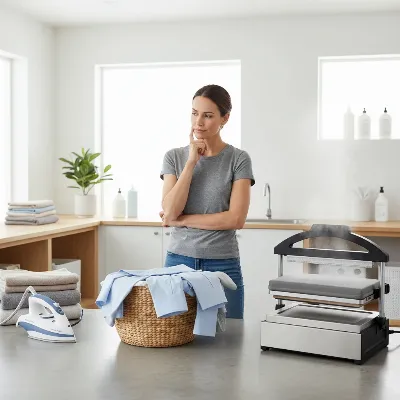 A person thoughtfully considering a traditional iron and a steam press on a clean laundry room counter, with a basket of clothes nearby. The scene is bright and modern, illustrating the choice between two garment care appliances.
Top Appliances for Effortless Laundry in 2026
Both the iron and steam press markets offer excellent choices in 2026. Here are some highly-regarded models across both categories:
Recommended Traditional Irons:
|
Our Picks for the Best Ironing Press in 2026
As an Amazon Associate I earn from qualifying purchases.
|
||
| Num | Product | Action |
|---|---|---|
| 1 | Calogy Mini Heat Press, Heat Transfer Machine, Constant Temp Control, Insulated Safety Base, Fits for Crafts, T-Shirt, Hat, Cap, Pillows(White Pink) |

|
| 2 | BLACK+DECKER Press & Steam 2-in-1 Iron and Steamer, 180% More Steam & One Temperature Technology, Ceramic Soleplate, Safe on All Fabric Types |
|
| 3 | Steamfast SF-680 Digital Steam Press with Multiple Fabric Settings and Steam Burst Function,Stainless/Black |
|
| 4 | Steamfast SF-623 Mid-Size Steam Press with Multiple Fabric Settings and Steam Burst Function, Black, 20.47" L x 17.16" W x 6.73" H |
|
| 5 | Cricut EasyPress Mini™ LT - Mint Green - Mini Heat Press for Pressing Shoes, Baby Clothes, T-Shirts, & More - Easy to Use with a Single Setting - Precision Tip - Compact & Portable Mini Iron |
|
| 6 | DRFLASH 2-in-1 Steamer & Iron for Clothes,15s Fast Heat-up 1200W Portable Handheld Garment Steamer,Travel Size with Large Ceramic Heat Panel,Quick Wrinkle Removal,110V-120V |
|
| 7 | The Quilted Bear Mini Steam Iron - Lightweight Mini Travel Iron for Effortless Quilting & Wrinkle-Free Clothes with Hard Shell Case - Travel Steamer Craft Press for Clothes & Crafts (Black) |
|
| 8 | Cricut EasyPress Mini Heat Press - for Pressing Small Objects Like Shoes, Stuffed Animals, Hats & More - 3 Heat Settings & Precision Tip - Ceramic-Coated Heat Plate - Compact & Lightweight - Zen Blue |
|
| 9 | BLACK+DECKER Easy Steam Compact Iron for Clothes, Automatic Shutoff, Nonstick Plate, Light Weight, 1200 Watts |
|
| 10 | HTVRONT Heat Press Mini Heat Press Machine, Small Heat Press Portable Iron Press Machine for T Shirts, Hats, Heating Transfer Projects (Mint) |
|
- Russell Hobbs Power Steam Ultra Iron: Often cited as a top performer, this steam iron is praised for its powerful steam output and ability to tackle stubborn creases efficiently. It features a good water tank capacity and accurate temperature control. Pros: Strong steam, precise, relatively lightweight. Cons: Can be slightly heavy for prolonged use.
- Tefal GV9820G0 High Pressure Steam Generator Iron: A premium option offering exceptional glide and powerful, continuous steam from a separate reservoir. It makes quick work of large ironing piles and delicate fabrics alike. Pros: Super powerful steam, large water capacity, lightweight iron head. Cons: Very expensive, larger footprint due to separate base.
- Tower T22008 CeraGlide Cordless Steam Iron: An excellent cordless option providing freedom of movement and convenience for quick touch-ups. It heats up quickly and maintains temperature well for its cordless design. Pros: Cordless freedom, quick heat-up, easy storage. Cons: Shorter continuous ironing time before reheating.
Recommended Steam Presses:
- Intelligent Digital Steam Press (e.g., Singer, Reliable, or specific 26″ models): These presses often feature smart digital controls, pre-set fabric options, and fast heat-up times (around 2 minutes). They deliver powerful, even steam for professional-grade results. Pros: High efficiency, digital controls, even pressure. Cons: Still bulky, learning curve for garment positioning.
- Steamfast SF-680 Digital Steam Press: A popular choice for home users, known for its reliable performance and user-friendly design. It offers a good pressing surface size and consistent steam delivery. Pros: User-friendly, good value, effective wrinkle removal. Cons: May lack some advanced features of premium models.
- SpeedyPress 80HD Digital Steam Press (32″): For those with larger loads or seeking a commercial-grade performance at home, this extra-large press significantly speeds up the process for linens, trousers, and shirts. Pros: Massive pressing surface, very fast, durable. Cons: Very large and heavy, premium price.
Tips for Using and Maintaining Your Iron or Steam Press Correctly
Proper use and maintenance are crucial for extending the lifespan of your appliance and ensuring optimal performance.
For Both Irons and Steam Presses:
- Use Distilled Water: To prevent mineral buildup and limescale, especially in hard water areas, always use distilled or demineralized water. This prolongs the life of the heating elements and prevents stains on your clothes.
- Clean Regularly: Wipe down the exterior with a damp cloth. For irons, clean the soleplate with a non-abrasive cleaner if residue builds up. For steam presses, keep the pressing surface clean according to manufacturer instructions.
- Descaling: Follow the manufacturer’s instructions for descaling, typically involving a vinegar solution or a commercial descaling agent, to clear internal mineral deposits.
- Proper Storage: Allow the appliance to cool completely before storing. Store irons upright and ensure steam presses are locked in their closed position to protect the pressing surfaces.
Specific to Irons:
- Match Heat to Fabric: Always check garment labels and adjust the iron’s temperature setting accordingly to prevent scorching or damage.
- Iron in Sections: For complex garments, work in small sections, always moving the iron to avoid leaving it in one spot too long.
- Utilize Steam Shot: Use the steam shot or spray function for stubborn wrinkles, but be mindful of water droplets on some fabrics.
Specific to Steam Presses:
- Position Carefully: Take time to position garments flat and smoothly on the pressing surface. Overlapping fabric or buttons can lead to new creases or damage.
- Use a Pressing Cushion: Many presses come with a pressing cushion, which is invaluable for intricate areas like sleeves, collars, and darted sections that don’t lie flat.
- Don’t Over-Press: A few seconds per section is usually sufficient. Excessive pressing time can flatten textures or over-heat delicate materials.
“The right garment care tool can improve your laundry routine from a chore into an efficient and satisfying process. Understanding how each appliance works best is key to achieving a flawless finish every time.” – Admin, ReviewGlorys.com
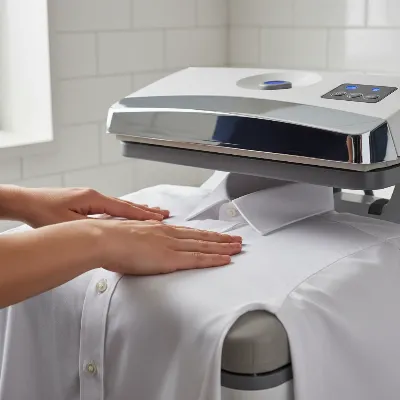 A person demonstrating proper usage of a steam press on a white shirt, carefully positioning it on the padded surface. The image highlights the large pressing area and careful garment placement, with a focus on ease of use.
Conclusion
Both traditional irons and steam presses have their distinct advantages in the ongoing battle against wrinkles. The traditional iron, with its precision and versatility, remains a staple for detailed work and crisp finishes on sturdy fabrics, while its affordability and compact size are undeniable benefits. The steam press, on the other hand, excels in speed and efficiency for large, flat items, offering a gentler, professional finish with less physical effort and a reduced risk of scorching.
The “best” choice depends entirely on your specific laundry needs, the types of garments you frequently process, your available space, and your budget. By carefully considering these factors and the detailed comparisons, you can confidently select the appliance that will not only remove wrinkles effectively but also enhance your garment care routine. Which ironing method will you embrace to keep your clothes looking impeccable?
Frequently Asked Questions
Is a steam press better for delicate fabrics than an iron?
Yes, a steam press is generally gentler on delicate fabrics like silk, wool, and synthetics. It uses diffused steam and controlled pressure, which relaxes fibers without the harsh direct heat and friction of an iron, minimizing the risk of scorching or flattening textures.
Can a steam press completely replace a traditional iron?
For many households, a steam press can largely replace an iron, especially for large, flat items and general wrinkle removal. However, a traditional iron still offers superior precision for intricate areas like collars, cuffs, pleats, and small garments, which can be awkward on a large press.
How much faster is a steam press compared to an iron?
A steam press can be significantly faster, especially for large items. For instance, pressing a sheet or a large tablecloth can be done three to four times quicker with a steam press, as it covers a much larger surface area in a single press compared to a handheld iron.
Do steam presses use more electricity than irons?
While steam presses often have higher wattage for quicker heat-up and larger steam output, their efficiency in processing clothes faster can sometimes offset the higher power consumption per minute. Overall electricity use depends on the duration and frequency of use for both appliances.
Are steam presses safe to use?
Yes, steam presses are generally considered safe. The heated plates are typically enclosed and often covered with a padded material, reducing the risk of direct contact burns compared to an exposed iron soleplate. Many models also include automatic shut-off features for added safety.
Frequently Asked Questions
Is a steam press better for delicate fabrics than an iron?
Yes, a steam press is generally gentler on delicate fabrics such as silk, wool, and synthetics. It utilizes diffused steam and controlled pressure, which relaxes fibers without the harsh direct heat and friction of a traditional iron, thereby minimizing the risk of scorching or flattening textures.
Can a steam press completely replace a traditional iron?
For many households, a steam press can largely replace an iron, particularly for large, flat items and general wrinkle removal. However, a traditional iron still offers superior precision for intricate areas like collars, cuffs, pleats, and small garments, which can be awkward to maneuver on a large press.
How much faster is a steam press compared to an iron?
A steam press can be significantly faster, especially for large items. For example, pressing a sheet or a large tablecloth can be completed three to four times quicker with a steam press, as it covers a much larger surface area in a single press compared to a handheld iron.
Do steam presses use more electricity than irons?
While steam presses often have higher wattage for quicker heat-up and larger steam output, their efficiency in processing clothes faster can sometimes offset the higher power consumption per minute. Overall electricity use depends on the duration and frequency of use for both appliances, but a steam press can reduce total ironing time by up to 75%.
Are steam presses safe to use?
Yes, steam presses are generally considered safe. The heated plates are typically enclosed and often covered with a padded material, which reduces the risk of direct contact burns compared to an exposed iron soleplate. Many models also include automatic shut-off features for added safety.
How to Choose Between an Iron and a Steam Press
Selecting the right garment care appliance involves evaluating your specific laundry needs, available space, and budget to ensure you get the most efficient tool for wrinkle removal.
Determine if you frequently iron large quantities of flat items like linens or curtains, for which a steam press is ideal. For intricate garments, delicate blouses, or items with many buttons, a traditional iron offers better control and precision.
Traditional irons are compact and affordable, typically under u00a3100. Steam presses are bulkier, require dedicated storage, and start around u00a3200, with advanced models exceeding u00a3500. Factor in both initial cost and long-term space requirements.
An iron excels at crisp creases, while a steam press provides a smooth, natural finish that is gentler on fabrics. Look for adjustable temperature/steam settings, auto shut-off, and anti-drip features in irons. For presses, consider digital controls and rapid heat-up times.
Invest in reputable brands with good build quality. Stainless steel or ceramic soleplates are durable for irons, while sturdy construction is key for presses. Always review manufacturer warranties and recent user feedback for insights into performance and longevity.

I got a steam press hoping it would replace my iron entirely. While it’s great for most of my shirts, I still find myself pulling out the old iron for collars and cuffs. It’s just not as precise for those intricate details, which was a bit disappointing.
I’ve been using a traditional iron for years, but the constant manual movement was getting to me. The steam press is a game-changer for my weekly laundry pile. It’s so much easier on my arms and shoulders, and my clothes look just as crisp.
My old iron was just not cutting it anymore for my husband’s work shirts. The steam press has been amazing. It gets rid of wrinkles so quickly and efficiently, and I don’t have to spend nearly as much time standing over an ironing board. Definitely worth the investment.
I was totally on the fence about getting a steam press, but after reading about how much faster it is for large items, I took the plunge. It really does cut down my ironing time by at least 75% for sheets and tablecloths. My back is thanking me already!