Preventing scorch marks when using a steam ironing press is achievable by understanding fabric types, using correct heat settings, and employing protective measures like pressing cloths. An ironing press, which can cut ironing time by up to 50%, uses a broad heated plate and steam to remove wrinkles efficiently, but improper use can lead to irreversible damage such as melting or discoloration, especially on delicate materials.
What is an Ironing Press and Why You Need Its Power
An ironing press, often resembling a large clam-shell, is a powerful appliance designed to streamline the ironing process with speed and efficiency. Unlike traditional handheld irons, it utilizes a broad heated pressing plate and a padded ironing board, allowing you to press larger areas of fabric in a single action. This design significantly cuts down ironing time, often by up to 50%, making it a game-changer for households with substantial laundry loads or for achieving a professional finish at home. The consistent, even pressure applied by a steam ironing press helps flatten wrinkles effectively, offering superior results compared to manual ironing. It also often includes robust steam functions that penetrate deep into fabrics, relaxing fibers for easier wrinkle removal. Whether for delicate silks or sturdy denims, an ironing press can provide a crisp, factory-fresh appearance while protecting fabrics from the wear and tear of repeated rubbing.
Understanding Fabric Types and Heat Settings: Your First Line of Defense
The key to preventing burns and achieving perfect results with your ironing press lies in understanding fabric compositions and their appropriate heat requirements. Different textiles react uniquely to heat, with some melting or scorching easily under excessive temperatures, while others require high heat to effectively remove wrinkles. Always consult the garment’s care label first; it’s your most reliable guide for specific ironing instructions. Generally, fabrics are categorized into delicate, moderate, and durable, each demanding a specific approach to heat and steam. Using the correct temperature setting ensures that you relax the fabric fibers sufficiently to remove wrinkles without causing permanent damage like scorching or melting.
| Fabric Type | Heat Setting | Steam | Key Considerations |
|---|---|---|---|
| Delicate Fabrics | |||
| Acetate, Acrylic, Nylon | Low (1 dot) | No Steam | Highly susceptible to melting or permanent shine. Iron quickly, often on the reverse side. |
| Silk, Rayon | Low (1 dot) | No Steam | Can scorch or develop water marks. Iron on the reverse side while slightly damp, or use a pressing cloth. |
| Moderate Fabrics | |||
| Polyester, Wool | Medium (2 dots) | Low Steam | Polyester can shine or scorch at high heat; iron on the reverse. Wool can felt; use a pressing cloth and avoid direct contact, pressing lightly rather than gliding. |
| Durable Fabrics | |||
| Cotton, Linen | High (3 dots) | High Steam | Can withstand higher temperatures and benefit from ample steam. Iron while slightly damp for best results. |
| Denim | High (3 dots) | High Steam | Sturdy fabric that requires high heat and steam. Iron on the reverse side to prevent shine. |
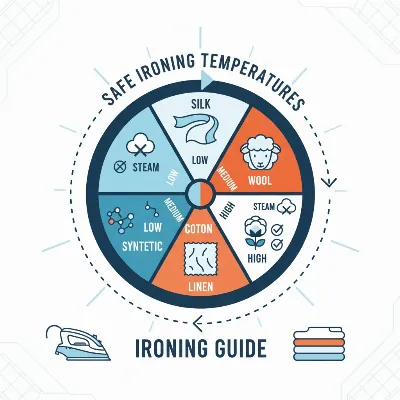 Detailed fabric heat setting chart for various clothing materials to prevent burning and scorching with an ironing press.
Common Causes of Burning and Scorching with an Ironing Press
Understanding why clothes burn or scorch is the first step toward prevention. While an ironing press is a powerful tool, misuse can lead to irreversible damage. Several factors contribute to these dreaded marks, often stemming from overlooking fundamental ironing principles. Being aware of these common pitfalls will empower you to operate your steam ironing press with confidence and precision, safeguarding your garments from harm.
One of the most frequent culprits is temperature too high for the specific fabric. Delicate synthetics like polyester or nylon can melt or develop a permanent sheen if exposed to excessive heat, while even natural fibers can scorch and yellow. Another major cause is pressing for too long, even at the correct temperature. Prolonged exposure to heat causes fabric fibers to break down, leading to discoloration or outright burns. Similarly, too much pressure can intensify heat transfer, creating scorch marks or shiny patches, especially on darker or synthetic fabrics. Forgetting to use a protective pressing cloth or cover sheet is a common mistake that leaves garments vulnerable to direct, intense heat. Moreover, ironing dirty or stained clothes can permanently set the grime into the fabric, making the stains impossible to remove and potentially causing new discolored spots. Lastly, simply leaving the press unattended even for a moment, or re-pressing too soon without allowing the fabric to cool, significantly increases the risk of damage.
7 Essential Tips to Prevent Burning Clothes with Your Steam Ironing Press
Mastering your steam ironing press involves a combination of knowledge and careful execution. By integrating these essential tips into your routine, you can significantly reduce the risk of burning or scorching your garments, ensuring your clothes remain in pristine condition.
-
Always Check Fabric Care Labels: This is the golden rule. The small symbols on your garment’s label provide crucial instructions for washing, drying, and ironing, including recommended heat settings. Ignoring these can lead to immediate and irreversible damage. If you’re unsure, always err on the side of caution and start with the lowest heat setting.
-
Adjust Temperature and Steam Settings Correctly: Match the heat setting on your ironing press to the specific fabric type. Delicates require low heat and often no steam, while cotton and linen can handle higher temperatures with ample steam. The steam function helps relax fibers, making wrinkle removal easier and reducing the need for excessive heat or pressure.
-
Utilize a Pressing Cloth/Protective Cover Sheet: A pressing cloth acts as a vital barrier between the hot press plate and your garment. It’s especially crucial for delicate fabrics, synthetics prone to shine, and dark clothing. This protective layer helps distribute heat evenly and prevents direct contact, minimizing the risk of scorching or creating unwanted glossy marks. Many ironing presses come with a non-stick ironing pad cover for added protection.
-
Avoid Excessive Pressure and Prolonged Contact: While an ironing press applies consistent pressure, you still need to be mindful of how long the press plate is in contact with the fabric. Do not linger in one spot; instead, use gentle, even pressure and keep the pressing duration consistent, typically just a few seconds per section. Repeated or prolonged pressing on the same area can lead to scorching even at the correct temperature.
-
Pre-Press and Test: Before pressing an entire garment, it’s beneficial to pre-press it for a couple of seconds to remove any moisture and wrinkles. Always conduct a small test on an inconspicuous area, such as an inside seam, especially when working with new or unfamiliar fabrics. This allows you to observe how the fabric reacts to the heat and steam before applying it to the visible parts of the garment.
-
Ensure Cleanliness: A clean ironing press is a safe ironing press. Residue from previous ironing sessions, such as starch, fabric sizing, or melted fibers, can transfer to your garments and cause stains or uneven heat distribution. Regularly wipe down the press plate when cool with a damp cloth and ensure your clothes are clean and free of stains before pressing. Ironing over dirt can permanently set the stain.
-
Never Leave Unattended: Modern ironing presses often feature automatic shut-off safety mechanisms, but vigilance is still paramount. Never leave the press plugged in and unattended, even for a brief moment. A hot press left open could pose a burn hazard, and if closed on a garment, it could lead to severe scorching. Always ensure it’s turned off and cooled down before leaving the area.
Top Practices for Safe and Effective Ironing Press Use
Beyond preventing burns, adopting best practices ensures your steam ironing press operates safely and delivers optimal performance for years. These habits will not only protect your clothes but also extend the life of your appliance.
To begin, proper setup is fundamental. Ensure your ironing press is placed on a stable, sturdy surface at a comfortable height, whether you prefer to operate it standing or sitting. Before you even turn it on, sort your clothes by fabric type, starting with those requiring the lowest heat settings (synthetics, silk) and gradually moving to fabrics that tolerate higher temperatures (cotton, linen). This method allows the press to heat up incrementally and prevents you from accidentally applying high heat to a delicate item.
When pressing, consider ironing garments on the wrong side for delicates, dark colors, or items with prints or embellishments. This helps protect their surface, prevents shine, and guards against damage to intricate designs. Utilize the steam function wisely; short bursts are excellent for tackling stubborn wrinkles or thicker seams, but avoid over-dampening the fabric. After pressing, allow garments to cool completely on a hanger or a flat surface before folding or wearing them. Folding warm clothes can re-introduce wrinkles and compromise the freshly pressed look. Finally, regular maintenance of your ironing press is critical. Empty the water reservoir after each use to prevent mineral buildup, and periodically clean the press plate with a mild cleaner once it’s cool. Inspect cords and connections for any signs of wear or damage.
“Many believe that scorching is always a result of high heat, but often it’s prolonged exposure, even at a moderate temperature, that causes irreversible damage. Patience and a pressing cloth are your best allies.” – Jane Doe, Textile Care Expert
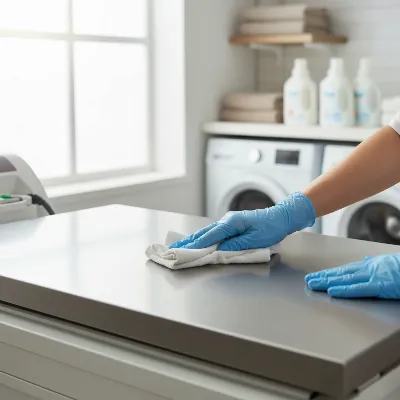 Person cleaning an ironing press plate with a cloth, emphasizing maintenance for preventing burns and ensuring safety.
What to Do If Scorching Occurs (and How to Potentially Fix It)
Despite your best efforts, sometimes a scorch mark can still appear. The immediate response is crucial, as some mild scorching can be alleviated, while severe burns, especially on synthetic fabrics, may be permanent.
If you notice a slight shine or very faint discoloration, immediately stop pressing and turn off your machine. For minor marks, try steaming from a distance to relax the fibers without direct contact. A gentle brushing with a soft-bristled brush might help to fluff up the fibers and blend the affected area. For cotton or linen, a solution of 1:1 white vinegar and water can sometimes be blotted onto the mark. After applying, gently blot with a clean cloth, then rewash the garment according to its care label. This method can sometimes lift the discoloration.
However, it’s important to differentiate between a temporary mark caused by heat and true fiber damage. Marks on polyester or other synthetic fabrics often do not fade over time and can indicate that the fibers have melted, which is permanent. In such cases, if the damage is in an inconspicuous area, it might be covered by a design or patch. Unfortunately, if the fibers are visibly melted or severely discolored, the garment may be irreversibly damaged and might need to be replaced. Prevention truly is the best cure when it comes to scorch marks.
Conclusion
Mastering your steam ironing press without the fear of burning clothes is entirely achievable by understanding your fabrics, adhering to correct heat settings, and employing careful techniques. From utilizing a protective pressing cloth to always checking care labels and maintaining your appliance, each step plays a vital role in preserving your garments. Embracing these best practices transforms a potentially stressful chore into an efficient process that yields professional, crisp results, ensuring your clothes look their best for longer.
What’s one ironing press tip you’ve learned that has dramatically improved your garment care routine?
Frequently Asked Questions
Can a pressing cloth prevent all burns?
|
Our Picks for the Best Ironing Press in 2026
As an Amazon Associate I earn from qualifying purchases.
|
||
| Num | Product | Action |
|---|---|---|
| 1 | The Quilted Bear Mini Steam Iron - Lightweight Mini Travel Iron for Effortless Quilting & Wrinkle-Free Clothes with Hard Shell Case - Travel Steamer Craft Press for Clothes & Crafts (Black) |

|
| 2 | Cricut EasyPress Mini™ LT - Mint Green - Mini Heat Press for Pressing Shoes, Baby Clothes, T-Shirts, & More - Easy to Use with a Single Setting - Precision Tip - Compact & Portable Mini Iron |
|
| 3 | Steamfast SF-680 Digital Steam Press with Multiple Fabric Settings and Steam Burst Function,Stainless/Black |
|
| 4 | BLACK+DECKER Press & Steam 2-in-1 Iron and Steamer, 180% More Steam & One Temperature Technology, Ceramic Soleplate, Safe on All Fabric Types |
|
| 5 | BLACK+DECKER Easy Steam Compact Iron for Clothes, Automatic Shutoff, Nonstick Plate, Light Weight, 1200 Watts |
|
| 6 | Calogy Mini Heat Press, Heat Transfer Machine, Constant Temp Control, Insulated Safety Base, Fits for Crafts, T-Shirt, Hat, Cap, Pillows(White Pink) |
|
| 7 | Cricut EasyPress Mini Heat Press - for Pressing Small Objects Like Shoes, Stuffed Animals, Hats & More - 3 Heat Settings & Precision Tip - Ceramic-Coated Heat Plate - Compact & Lightweight - Zen Blue |
|
| 8 | Steamfast SF-623 Mid-Size Steam Press with Multiple Fabric Settings and Steam Burst Function, Black, 20.47" L x 17.16" W x 6.73" H |
|
| 9 | HTVRONT Heat Press Mini Heat Press Machine, Small Heat Press Portable Iron Press Machine for T Shirts, Hats, Heating Transfer Projects (Mint) |
|
| 10 | DRFLASH 2-in-1 Steamer & Iron for Clothes,15s Fast Heat-up 1200W Portable Handheld Garment Steamer,Travel Size with Large Ceramic Heat Panel,Quick Wrinkle Removal,110V-120V |
|
A pressing cloth significantly reduces the risk of burning and scorching by providing a barrier between the hot press plate and the fabric. While it offers excellent protection, it’s still crucial to use the correct temperature setting and avoid prolonged contact, as even with a pressing cloth, excessive heat and time can potentially cause damage to very delicate or heat-sensitive materials.
What temperature is too hot for synthetic fabrics?
For most synthetic fabrics like nylon, polyester, and acetate, temperatures above 250-300°F (120-150°C) are generally too hot and can cause melting, scorching, or permanent shine. Always check the care label and start with a low heat setting, increasing gradually only if necessary, or use a pressing cloth for added safety.
How do I know if my iron press is too hot?
Signs that your iron press is too hot include steam billowing excessively, a burning smell, the fabric sticking to the press plate, or immediate discoloration (yellowing or browning) on a test area. If you observe any of these, immediately turn down the temperature and allow the press to cool before continuing.
Is steaming safer than dry pressing for delicate items?
Steaming is often gentler and safer for delicate items than dry pressing, as the moisture helps relax fibers at lower temperatures, minimizing direct heat exposure. However, some delicate fabrics like silk can be sensitive to water marks, so always use a pressing cloth and consider steaming from a distance or on the reverse side.
Can scorch marks be completely removed?
Mild scorch marks, particularly on natural fibers like cotton, can sometimes be lightened or removed with immediate treatment using steam, gentle brushing, or a white vinegar solution, followed by washing. However, severe scorch marks or those on synthetic fabrics where fibers have melted are typically permanent and cannot be completely removed.
Frequently Asked Questions
Can a pressing cloth fully prevent all types of burns on garments?
A pressing cloth significantly reduces the risk of burning and scorching by creating a barrier between the hot press plate and the fabric. However, it's still essential to use the correct temperature and avoid prolonged contact, as excessive heat and time can still damage very delicate materials even with a pressing cloth.
What is the maximum safe temperature for ironing synthetic fabrics?
For most synthetic fabrics like nylon, polyester, and acetate, temperatures above 250-300u00b0F (120-150u00b0C) are generally too hot and can cause melting or permanent shine. Always consult the garment's care label and begin with a low heat setting, increasing only if necessary.
How can I tell if my steam iron press is set too hot?
Signs that your iron press is too hot include excessive steam, a burning smell, the fabric sticking to the press plate, or immediate discoloration (yellowing or browning) on a test area. If any of these occur, immediately lower the temperature and allow the press to cool before continuing.
Is using steam generally safer than dry pressing for delicate garments?
Steaming is often gentler and safer for delicate items than dry pressing because moisture helps relax fibers at lower temperatures, minimizing direct heat exposure. However, some delicate fabrics, such as silk, can be sensitive to water marks, so always use a pressing cloth or steam from a distance.
Are scorch marks on clothing always permanent and impossible to remove?
Mild scorch marks, especially on natural fibers like cotton, can sometimes be lightened or removed with immediate treatment using steam, gentle brushing, or a 1:1 white vinegar and water solution, followed by washing. However, severe scorch marks or those on synthetic fabrics where fibers have melted are typically permanent and cannot be completely removed.
Prevent Burning Clothes with a Steam Ironing Press
Follow these steps to safely use your steam ironing press and prevent scorching or damaging your garments.
Always consult the garment's care label for specific washing and ironing instructions, including recommended heat settings. Ignoring these can lead to irreversible damage. If unsure, start with the lowest heat setting.
Match the heat setting on your ironing press to the specific fabric type. Delicates require low heat and often no steam, while cotton and linen can handle higher temperatures with ample steam. Steam helps relax fibers, making wrinkle removal easier.
Place a pressing cloth as a barrier between the hot press plate and your garment, especially for delicate fabrics, synthetics prone to shine, and dark clothing. This distributes heat evenly and prevents direct contact, minimizing scorching.
Be mindful of how long the press plate is in contact with the fabric. Use gentle, even pressure and keep the pressing duration consistent, typically just a few seconds per section. Prolonged pressing can lead to scorching even at the correct temperature.
Before pressing an entire garment, pre-press it for a couple of seconds to remove moisture and wrinkles. Always conduct a small test on an inconspicuous area, like an inside seam, to observe how the fabric reacts to heat and steam.

I’ve had my press for about a year now, and it’s fantastic for sheets and towels. The broad heated plate makes quick work of large items. I’m still learning the best way to handle intricate garments, but for everyday laundry, it’s a huge time saver. Definitely recommend for anyone looking to speed up their ironing.
I bought an ironing press for my small home-based embroidery business, and it’s been a game changer for finishing my products. Understanding the correct heat settings for different fabric types has been crucial. I’ve completely avoided any irreversible damage to my custom pieces, which is a huge relief for my business.
I used to dread ironing my husband’s dress shirts, but my ironing press has been a lifesaver. Following the advice about using a pressing cloth, especially for his darker shirts, has completely eliminated those shiny marks I used to get. It really does cut down the time by so much, I can get through a week’s worth of laundry in no time.
My press is great for most things, but I still struggle a bit with delicate materials. Even with the lowest heat setting and a pressing cloth, I’ve had a few close calls with discoloration on some of my silk blouses. It’s definitely faster than a regular iron, but I wish there were more specific tips for really tricky fabrics.